
 Whatsapp
How to Check If a Company Is VAT Registered in the UK (2026 Guide)
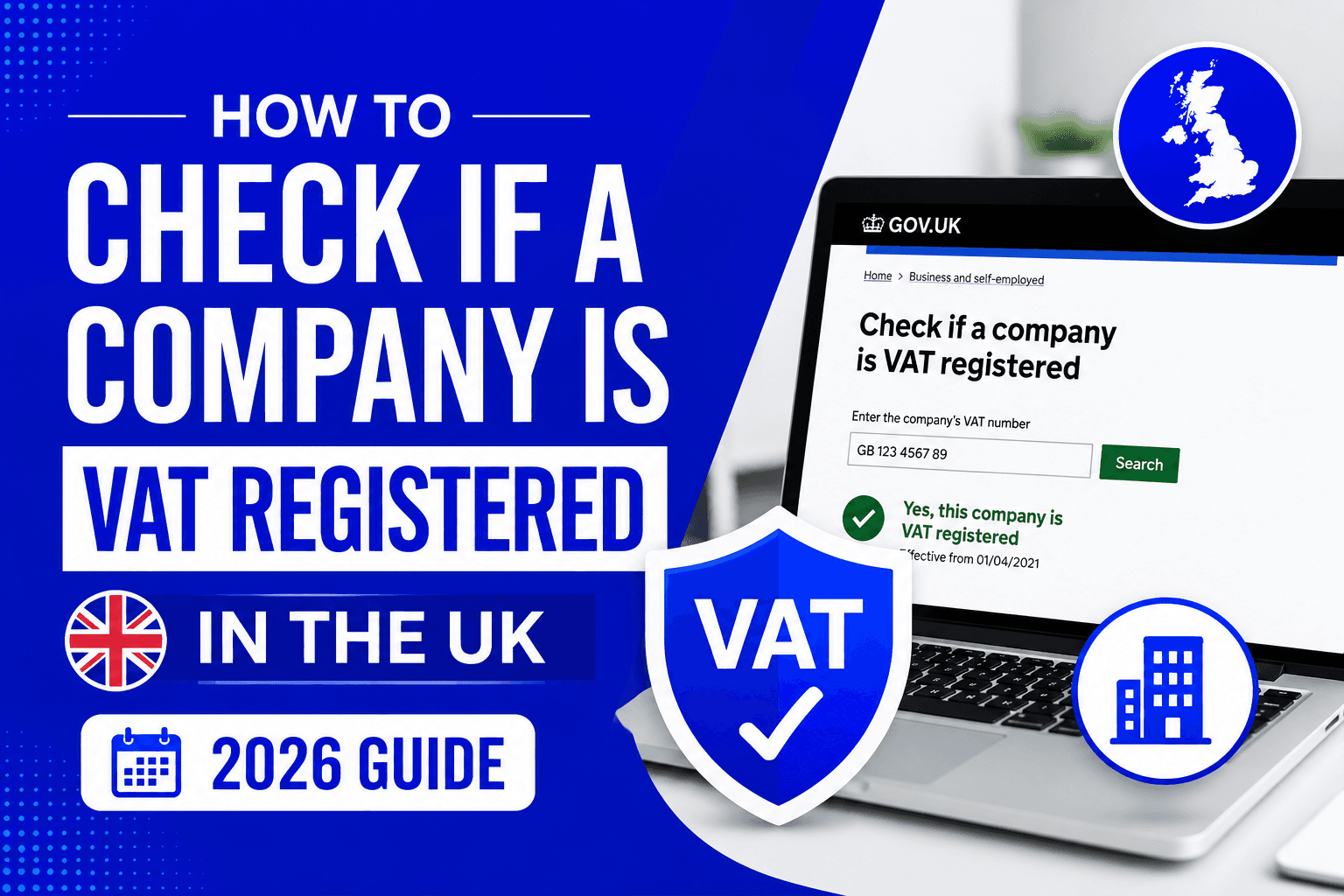
Whether you're a buyer, supplier, or entrepreneur, verifying a company's VAT status can save you from costly mistakes — and knowing how the system works puts you ahead of the game.
Why It Matters to Check VAT Registration
Before signing a contract, placing a large order, or paying a VAT invoice, you should always confirm that the other party is genuinely VAT registered with HMRC. Fraudulent VAT numbers are more common than most people realise, and paying VAT to a company that isn't registered means you cannot reclaim that tax. On the flip side, if you're buying or setting up a UK company, understanding VAT registration status is fundamental to operating legally and efficiently.
What Is a VAT Registration Number?
A UK VAT registration number is a unique identifier issued by HMRC (His Majesty's Revenue and Customs) to businesses that are registered to charge and collect VAT. It follows the format GB followed by 9 digits — for example, GB123456789. Some businesses display it on invoices simply as a 9-digit number without the "GB" prefix.
A company must register for VAT if its taxable turnover exceeds the current threshold (£90,000 as of 2025/26). Businesses below this threshold can register voluntarily, which many do to appear more credible or to reclaim VAT on purchases.
4 Official Ways to Check If a Company Is VAT Registered
1. Use the HMRC VAT Number Checker (Free & Instant)
The quickest method is HMRC's own online VAT registration verification tool.
How to use it:
- Go to: https://www.tax.service.gov.uk/check-vat-number/enter-vat-details
- Enter the VAT number you want to verify
- The tool confirms whether the number is valid and shows the business name and address associated with it
This is the most reliable method because it pulls directly from HMRC's live register. You can check any UK VAT number for free, instantly, at any time.
Tip:
Always use this tool before paying a VAT invoice from a new supplier. It takes 30 seconds and could save you hundreds or thousands of pounds.
2. Use the EU VIES System (For Cross-Border Checks)
If you're dealing with a UK business that trades in the EU, or checking an EU-based supplier, the VAT Information Exchange System (VIES) — maintained by the European Commission — is a useful cross-reference tool.
How to use it:
- Visit: https://ec.europa.eu/taxation_customs/vies/
- Select "GB" (or the relevant country code)
- Enter the VAT number
- The system returns the registration status and registered business details
Note: Since Brexit, UK VAT numbers are no longer automatically listed in VIES. However, businesses trading with EU customers may have a separate EU VAT registration, so this tool remains useful in international contexts.
3. Ask the Company Directly
This sounds obvious, but it's important. A legitimately VAT-registered company will:
- Display its VAT number on all invoices (this is a legal requirement)
- Be willing to confirm its VAT registration details on request
- Provide a VAT registration certificate if needed
If a supplier is reluctant or unable to provide a valid VAT number, treat this as a red flag. VAT-registered businesses are legally required to issue VAT invoices showing their registration number when charging VAT.
4. Check Companies House Records
While Companies House does not directly show VAT registration status (that's HMRC's domain), it does provide useful background information about a company's legitimacy — its registered name, number, directors, filing history, and registered address.
How to check:
- Visit: https://find-and-update.company-information.service.gov.uk
- Search by company name or Companies House number
- Cross-reference the name and address with the details shown in the HMRC VAT checker
A mismatch between what Companies House shows and what HMRC's VAT register shows may indicate fraud or an error worth querying.
How to Read a VAT Invoice Correctly
A valid UK VAT invoice must legally include:
- The supplier's VAT registration number (GB + 9 digits)
- The date of supply
- A unique invoice number
- The seller's name and address
- A description of the goods or services
- The VAT rate applied (e.g., 20%, 5%, or 0%)
- The total VAT charged
- The total amount including and excluding VAT
If any of these are missing — especially the VAT number — you cannot use the invoice to reclaim VAT. Always check before processing.
What If a VAT Number Turns Out to Be Invalid?
If the HMRC checker returns a "not valid" result for a number that was presented to you on an invoice:
- Contact the supplier immediately and ask them to clarify or correct the number
- Do not reclaim the VAT on that invoice until the issue is resolved
- Report suspected VAT fraud to HMRC via their fraud hotline or online: https://www.gov.uk/report-vat-fraud
- Keep records of your verification attempts — this demonstrates due diligence should HMRC ever query your VAT returns
Common Signs of VAT Fraud
While most businesses operate legitimately, VAT fraud remains a concern in the UK. Watch out for these warning signs:
- VAT number cannot be verified through HMRC's official VAT checker.
- VAT is charged on invoices, but no VAT registration number is displayed.
- Company name or address does not match the details shown in HMRC or Companies House records.
- Suppliers refuse to provide VAT registration details when requested.
- Invoices contain missing or incorrect information, such as incomplete business details or unusual formatting.
- Businesses offer unusually low prices while still charging VAT, which may indicate fraudulent activity.
- Frequent changes in company details without a clear explanation.
Taking a few minutes to verify VAT details can help protect your business from financial losses, VAT recovery issues, and compliance risks.
VAT Registration Thresholds & Voluntary Registration (2026)
| Situation | VAT Threshold | Action Required |
|---|---|---|
| Taxable turnover exceeds £90,000 | Mandatory registration | Must register within 30 days |
| Turnover below £90,000 | Voluntary registration | Can register at any time |
| Non-UK business selling to UK customers | Varies by type of supply | May need to register regardless of turnover |
| Buying a readymade VAT-registered company | N/A | VAT number already active and verified |
Why Some Businesses Skip the Wait — and Buy a Readymade VAT Registered Company
Standard VAT registration through HMRC can take 2 to 8 weeks, sometimes longer. During that window, you cannot legally charge VAT, reclaim input VAT, or issue compliant VAT invoices — which can delay contracts, banking, and supplier relationships.
This is why a growing number of UK and international entrepreneurs are opting to buy a readymade UK VAT registered company instead of registering from scratch.
A readymade VAT company is a fully incorporated UK Limited Company that already has an active, HMRC-approved VAT number in place. Everything — the Certificate of Incorporation, Companies House registration, and VAT registration confirmation — is already set up and verified. You simply go through a secure ownership transfer process and start trading immediately, often within 24 to 48 hours.
This approach is particularly popular with:
- Amazon FBA and Shopify sellers who need instant VAT compliance to list products and accept payments
- International entrepreneurs and non-UK residents who want a UK trading presence without the lengthy registration delays
- Import/export businesses that need VAT compliance from day one
- Consultants and agencies launching quickly to onboard clients without compliance gaps
Is Buying a Readymade VAT Company Legal?
Yes, absolutely. Purchasing a readymade company is a fully legal and widely used route to business setup in the UK. The company has already been incorporated through Companies House and VAT-registered with HMRC. The ownership transfer is handled through proper legal documentation — including share transfer forms and director updates — all in compliance with UK company law.
The key is working with a reputable provider that carries out proper KYC (Know Your Customer) checks, maintains clean company records, and manages the ownership transfer through official channels.
Benefits of Being VAT Registered
VAT registration offers several advantages for businesses, including:
- Reclaim VAT on eligible business expenses and purchases.
- Enhance business credibility with customers, suppliers, and partners.
- Access larger contracts and tenders that may require VAT registration.
- Improve cash flow management through VAT recovery on qualifying costs.
- Build trust with corporate clients who prefer working with VAT-registered businesses.
- Support international trade and transactions with other VAT-registered companies.
- Demonstrate business growth and professionalism in competitive markets.
- Register voluntarily below the threshold to strengthen your market presence and prepare for future expansion.
How Leadforce Can Help You Get a VAT Registered UK Company Fast
At Leadforce, we maintain a curated stock of readymade UK VAT registered companies — pre-verified with HMRC and Companies House — ready for immediate transfer. Every company comes with:
- ✅ An active, HMRC-approved UK VAT number
- ✅ Certificate of Incorporation
- ✅ Companies House registration documents
- ✅ VAT registration confirmation letter
- ✅ Share transfer documentation
- ✅ Director and shareholder update assistance
- ✅ Registered office address support
- ✅ Ongoing compliance guidance
Whether you're a UK-based startup, an overseas entrepreneur, or an e-commerce seller needing instant VAT compliance, Leadforce handles the entire process from selection to transfer — so you can start trading without the wait.
Packages start from £899, and most clients are fully operational within 24–48 hours of completing KYC verification.
Quick Summary: How to Check If a Company Is VAT Registered
- Use HMRC's VAT verification tool at tax.service.gov.uk — free, instant, and authoritative
- Check the invoice — a valid VAT invoice must include a GB VAT number
- Use VIES for EU cross-border verification
- Cross-check on Companies House to confirm company identity and address
- Ask the business directly — legitimate companies will confirm their details without hesitation
And if you're the one setting up a UK business and need a VAT number fast — skip the queue with a readymade VAT registered company from Leadforce.
Explore More Leadforce Services
Leadforce provides expert solutions to help entrepreneurs and businesses set up and manage their UK companies efficiently. Explore our most relevant services for company formation, VAT compliance, and business operations:
Buy Readymade VAT Registered Company
Skip the 2-8 week HMRC registration wait. Get an active, HMRC-approved UK VAT number and start trading immediately — often within 24-48 hours.
UK Company Formation
Set up your UK limited company quickly and correctly with full compliance support, including VAT registration guidance and HMRC requirements.
Non-Resident UK Company Formation
Tailored services for overseas founders and investors, providing full support for VAT registration, compliance, and a compliant UK company setup.
Nominee Director Services
Appoint professional nominee directors to meet legal requirements while protecting privacy and ensuring compliance with UK regulations.
Registered Office Address Services
Secure a UK-registered address for your company to receive official correspondence and comply with Companies House regulations.
Virtual Office Address Services
Benefit from a fully managed virtual office address, including mail handling and forwarding, ideal for international entrepreneurs.